
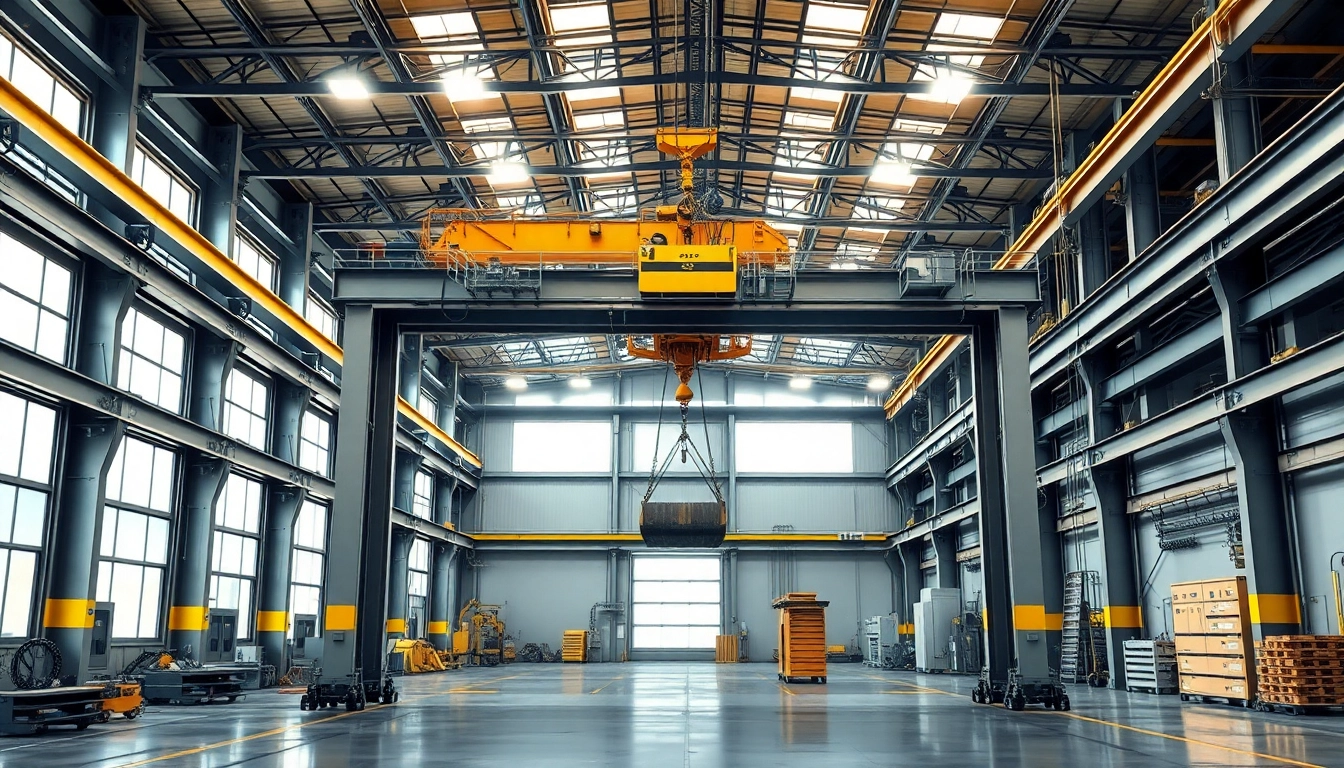
The Fundamentals of Bridge Cranes
Bridge cranes, also known as overhead cranes, are essential in various industries for transporting heavy loads across large distances. These cranes are designed to enhance efficiency in factories, warehouses, and construction sites, allowing for the smooth movement of materials. A well-designed bridge crane can significantly improve workflow, reduce labor costs, and enhance workplace safety. When exploring options, bridge crane systems are available in a variety of configurations tailored to meet specific operational needs.
What is a Bridge Crane?
A bridge crane is a type of overhead crane that consists of a beam or a bridge capable of spanning a production area, equipped with a hoist that moves along the beam. This design allows the crane to lift and move heavy materials across the entire span of the area, making it invaluable for heavy industrial applications. The crane operates on parallel runways, either installed on existing structures or as freestanding units, providing flexibility in design and usage.
Key Components and Their Functions
Understanding the key components of a bridge crane is crucial for effective operation and maintenance. Key elements include:
- Bridge Beam: The main horizontal component that spans the distance between the runways.
- Runways: The tracks on which the bridge travels, either mounted on the building structure or freestanding.
- Hoist: The lifting mechanism that raises and lowers loads, often utilizing electric or hydraulic power.
- Controls: Systems used to operate the crane, which can range from simple pendant controls to sophisticated remote-controlled systems.
Types of Bridge Cranes and Their Applications
Bridge cranes can be classified into several types based on their design and operational needs:
- Single Girder Cranes: Suitable for lighter loads, typically up to 10 tons, and ideal for shorter spans.
- Double Girder Cranes: Designed for heavier loads, they provide more rigidity and can span larger distances.
- Freestanding Cranes: These cranes stand on their own supports, offering flexibility in positioning without the need for significant structural support.
- Articulating Cranes: These cranes feature a jointed arm, providing enhanced maneuverability for complex layouts.
Each type serves distinct operational needs and can be customized based on the specific requirements of a facility.
Choosing the Right Bridge Crane for Your Needs
Assessing Load Capacity and Span Requirements
One of the first steps in selecting a bridge crane is determining the load capacity and the span needed for efficient operations. Load capacity must align with the heaviest anticipated loads, while the span must cover the distance between the runways. Overestimating capacity can lead to unnecessary costs, while underestimating can jeopardize workplace safety.
Understanding Different Operating Environments
Consider the specific environment where the bridge crane will be used. Factors such as:
- Temperature Variations: Extreme temperatures can affect the mechanical performance of the crane.
- Humidity and Dust: Certain environments may require specially designed cranes that can withstand corrosive elements.
- Space Limitations: Consideration of available space for installation and operation will affect the crane design.
Understanding these factors ensures that the selected crane meets operational demands and safety standards.
Comparative Analysis: Bridge Crane vs. Gantry Crane
Bridge cranes and gantry cranes serve similar purposes but differ significantly in design and application. Bridge cranes are fixed installations utilizing a two-rail system that rests on existing structures or supports, while gantry cranes are mobile systems that run on their own legs. One of the main advantages of gantry cranes is their versatility, as they can be relocated easily across different areas of a facility. In contrast, bridge cranes typically offer greater lifting capacities and are better suited for permanent installations.
Installation and Maintenance Best Practices
Preparing the Site for Bridge Crane Installation
Before installation, site preparation is critical. Ensure that the support structure is engineered to handle the weight and dynamic impacts of the bridge crane. This includes verifying the integrity of the building's framework and the load-bearing capabilities of the floors. Additionally, consider the placement of electrical systems and runway alignment for optimal crane operation.
Routine Maintenance for Optimal Performance
Regular maintenance is vital to extend the life of bridge cranes and ensure safe operation. Maintenance activities should include:
- Visual Inspections: Regularly check for signs of wear and tear on the hoist, runway, and other components.
- Lubrication: Ensure all moving parts are well-lubricated to reduce friction and prevent overheating.
- Load Testing: Periodically test the crane under its maximum load conditions to ensure safety and reliability.
Implementing a scheduled maintenance plan helps avoid costly breakdowns and enhances operational efficiency.
Common Issues and How to Resolve Them
Each bridge crane may encounter operational issues over time. Some common problems include:
- Electrical Failures: Regular checks of the electrical system can prevent unexpected outages.
- Wear on Hoisting Mechanisms: Replace worn components promptly to maintain lifting capabilities.
- Alignment Issues: Ensure regular checks of the crane’s alignment to avoid undue stress on components.
Proactive troubleshooting is key to ensuring long-lasting performance.
Cost Considerations for Acquiring a Bridge Crane
Budgeting for Purchase vs. Rental Options
Deciding whether to purchase or rent a bridge crane often depends on frequency of use and budget constraints. Purchasing provides long-term savings if the crane is used consistently, while renting may be feasible for short-term projects. When budgeting, consider all associated costs, including installation, maintenance, and training for operators.
Understanding Total Cost of Ownership
The total cost of ownership (TCO) includes not just the purchase price but also the costs of operation, maintenance, and potential upgrades over the crane's lifespan. Analyzing TCO helps businesses make informed decisions regarding acquisition versus leasing options.
Evaluating Long-term Value and ROI
Bridge cranes represent a significant investment, and understanding their long-term value is crucial. Factors to consider when evaluating ROI include:
- Increased Efficiency: A well-implemented bridge crane can significantly improve workflow.
- Labor Savings: Automating material handling reduces the workforce required for moving heavy loads.
- Safety Improvements: Enhancing safety protocols through mechanized systems can decrease accident-related costs.
Measuring these factors against initial costs will provide insights into the real value of the equipment over time.
Future Trends in Bridge Crane Technology
Innovations Shaping the Industry by 2025
The crane industry is experiencing rapid technological advancements that will shape operations in the coming years. Innovations such as integrated sensor technologies, improved materials for lighter and stronger cranes, and enhanced safety features will likely dominate the market. These advancements are aimed at increasing productivity and reducing operational costs.
Automation and its Impact on Crane Operations
Automation is emerging as a game-changer in crane operations, with automated guided vehicles (AGVs) and remote-controlled systems becoming increasingly commonplace. This shift not only boosts efficiency but also reduces human error, leading to safer working environments. As facilities integrate automation, the role of operators will evolve to focus more on oversight and coordination.
Sustainability Practices in Crane Manufacturing and Use
With growing emphasis on sustainability, crane manufacturers are exploring eco-friendly materials and energy-efficient technologies. Innovations such as electric hoists and regenerative braking systems are designed to minimize energy consumption. By adopting sustainable practices, businesses can not only reduce their environmental footprint but also attract clients who prioritize corporate responsibility.