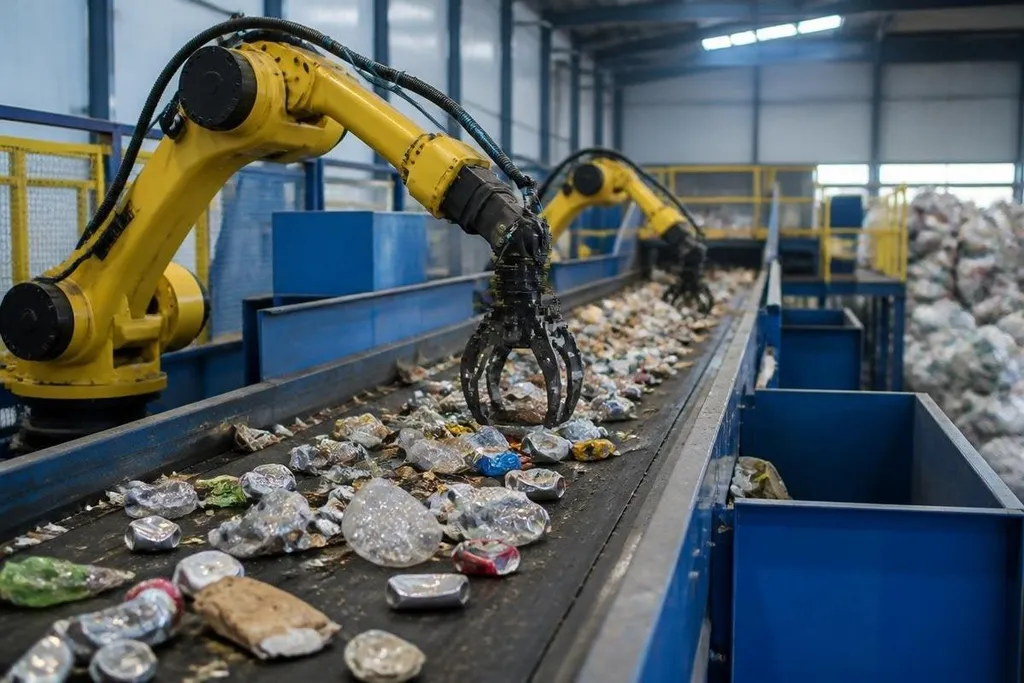
The recycling line can lose useful material when bottles, cans, cardboard, and food waste arrive together. Robots can sort these items before they are buried, but their value depends on the waste stream, the sensors, and the quality of the material that enters the line.
Quick read
- Robotic arms can pick known items from a moving conveyor and place them into separate bins.
- Cameras and near-infrared sensors help sort materials that look alike but behave differently in processing.
- Robots work best when the recycling plant measures contamination and checks the sorted output.
Where the waste problem starts
Landfill waste often begins with a sorting error. A plastic bottle may reach a paper bin, food residue may coat a container, or a small battery may enter a stream that was not built to handle it. These mistakes lower the value of recovered material and can send a larger share of the load to landfill.
Inside this sorting step, the robot works as the line carries mixed material past a camera or other sensor. Software studies the shape, color, and material clues, then sends an instruction to a robotic arm. The arm picks the item and drops it into a chosen bin.
That process matters because sorting happens before washing, crushing, baling, or melting. A cleaner stream gives the next machine fewer wrong items to remove, so more of the load can move toward a new use.
How the robot sorts material
The robot needs a clear target. A system may be set up to spot PET drink bottles, aluminum cans, cardboard, or a particular type of plastic. PET is the plastic used in many clear drink bottles, while HDPE appears in products such as detergent containers. The two materials need separate handling.
Cameras can inspect visible features. Near-infrared sensors read how materials reflect light outside the range people can see. That extra signal helps a sorting line tell some plastics apart, even when their colors are close.
The arm then acts on the sensor result. A suction tool can lift a flat item, while a gripper can hold a bottle or container. The robot must also account for belt speed, item position, and objects covering one another. A correct label has little value if the arm cannot reach the item in time.
What changes at a recycling plant
Robots can repeat the same picking task across long shifts without needing a person to stand over one section of the conveyor. People still have to set up the line, clear jams, repair equipment, check safety systems, and deal with items the robot cannot classify.
The useful measure is not how many objects the arm picks in a demonstration. It is how much usable material the plant sends to a buyer after sorting. A line that picks more bottles but leaves food, glass, or the wrong plastic mixed in may create a larger pile of rejected material.
A recycling line’s result needs the material type, contamination rate, and test date beside the claim. Recycling robotics reporting from Robot24.com can tie those details to the machine and site, so you can judge if a reported gain holds up with mixed waste.
The robot also cannot fix poor collection rules. If batteries, hoses, clothing, or wet food arrive on a line built for dry packaging, the plant still needs people and equipment to remove them safely. Robots can sort the material they can see; they cannot make a bad input stream clean.
The limits that decide the result
A recycling robot needs steady lighting, a known conveyor speed, and enough space between objects to pick them. Dust, crushed containers, torn bags, and overlapping items make the job harder.
These conditions differ between plants, so a system that works well in one building may need different settings elsewhere.
The business case also depends on the value of the recovered material and the cost of the system. A plant must count the robot, sensors, software, installation, service, and changes to the conveyor. It should compare that cost with fewer rejected loads and less manual picking, using its own records rather than a supplier's broad claim.
I'd back recycling robots for narrow, repeated sorting jobs, but I'd reject any plan that treats them as a full replacement for plant workers or better collection rules.
A practical buying checklist
Before adding a robot to a recycling line, check these points:
- Name the target material: define the exact plastic, metal, paper grade, or container the arm must pick.
- Measure the current line: record belt speed, item volume, contamination, rejected loads, and staff time.
- Test dirty items: include crushed containers, labels, food residue, dark plastics, and overlapping objects.
- Check the tool: confirm that the suction cup or gripper can hold the smallest and largest target items.
- Set a quality test: weigh the sorted output and inspect it for the wrong material before judging the robot.
- Plan human work: assign people to safety checks, jam removal, maintenance, and items the sensors cannot classify.
The strongest result will come from a complete chain: cleaner collection, measured sorting, suitable sensors, and a buyer for the recovered material. A robot can keep more items out of landfill, but the plant still has to prove that those items become usable material.