
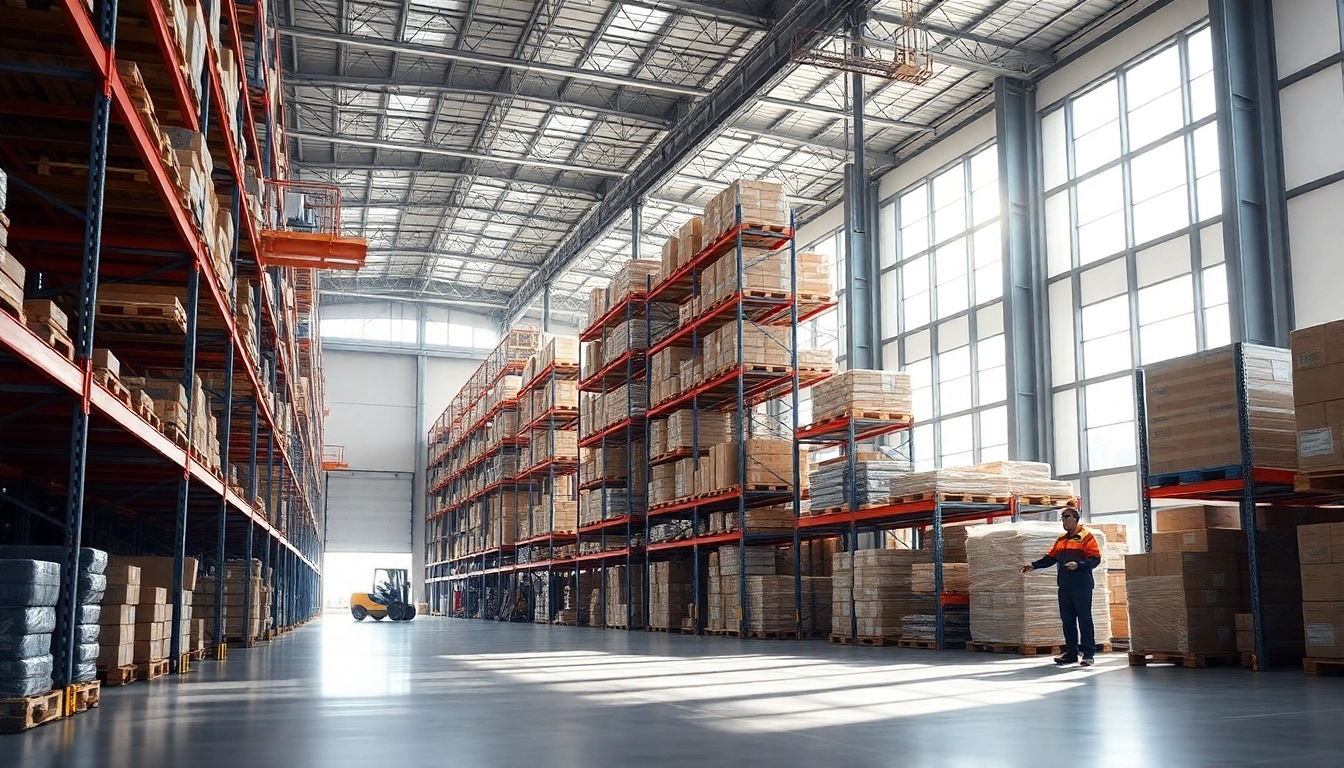
What is a Warehouse?
Definition and Purpose of a Warehouse
A warehouse is fundamentally a large building designated for storing goods, which are essential for various businesses involved in manufacturing, transportation, and distribution. These facilities serve as vital links in the supply chain, functioning as the staging ground where products are received, stored, processed, and dispatched. Warehouses play an integral role in the logistics of managing goods efficiently, ensuring that businesses can meet customer demand without delays.
Types of Warehouses in Modern Industry
Warehouses are categorized by their specific functions and design. Some of the major types include:
- Private Warehouses: Owned and operated by a company to store its own products.
- Public Warehouses: Operated as an independent business offering storage space and services to multiple clients.
- Automated Warehouses: Utilize technology and machines for storage and retrieval processes, significantly enhancing efficiency.
- Distribution Centers: Designed specifically for quick loading and unloading of goods to optimize order fulfillment and shipping.
- Cold Storage Warehouses: Maintained at low temperatures to store perishable goods such as food and pharmaceuticals.
- Fulfillment Centers: Focused on e-commerce and direct-to-consumer operations, these centers expedite the shipping of goods after online orders are made.
Warehouse vs. Storage Facility: Key Differences
While the terms "warehouse" and "storage facility" are often used interchangeably, they have distinct differences. A warehouse is typically associated with logistics and supply chain operations, involving a systematic process of receiving, managing, and distributing goods. In contrast, a storage facility is more passive, focused on the long-term preservation of items without necessarily involving significant operational activities related to their movement. This distinction is crucial for businesses to understand, as each type of facility serves specific operational needs.
Essential Warehouse Functions
Receiving and Inspecting Goods
The receiving process marks the beginning of a product's journey within the warehouse. It involves:
- Accepting deliveries from suppliers.
- Inspecting goods for damage or discrepancies against purchase orders.
- Logging received items into the inventory management system.
- Allocating storage space based on product type and demand.
Efficient receiving practices are critical, as they set the tone for the rest of the warehouse operations. Robust protocols minimize errors and guarantee high standards of quality control.
Storage Solutions and Inventory Management
Effective storage solutions enable warehouses to maximize their capacity while ensuring easy access to products. Inventory management is vital for tracking stock levels, orders, and deliveries. Common strategies include:
- ABC Analysis: Categorizing inventory into three categories based on importance and value.
- Just-in-Time Inventory: Aligning inventory orders with production schedules to reduce holding costs.
- Cycle Counting: Regularly checking a portion of inventory to maintain accurate stock records.
Modern warehouses often utilize software systems, such as Warehouse Management Systems (WMS), to optimize inventory tracking and management.
Order Fulfillment Processes in Warehouses
Order fulfillment is a core function of warehouses, involving several key steps:
- Order Receipt: Orders come from customers or retail stores.
- Picking: Staff or automated systems retrieve items from storage based on order lists.
- Packing: Correctly packing goods to ensure safe delivery.
- Shipping: Coordinating logistics for transporting orders to their final destination.
Efficiency in order fulfillment directly impacts customer satisfaction and can serve as a competitive advantage in the marketplace.
Best Practices in Warehouse Management
Implementing Effective Warehouse Layouts
A well-planned warehouse layout is crucial in achieving optimal efficiency. It involves:
- Flow Optimization: Designing layouts that allow smooth flow from receiving to storage to shipping.
- Product Placement: Strategically placing high-demand items closer to shipping areas to minimize travel time.
- Flexible Workspaces: Designing spaces that can adapt to changing business needs or inventory types.
Regular assessments and layout adjustments can lead to significant improvements in operational efficiency and productivity.
Utilizing Warehouse Management Systems (WMS)
Warehouse Management Systems are software solutions that streamline warehouse operations. The key benefits include:
- Real-time Inventory Tracking: Keeping accurate records of stock levels across various locations.
- Automated Reporting: Generating performance metrics for better decision-making.
- Enhanced Communication: Facilitate better inter-departmental cooperation and coordination.
Implementing a WMS can offer a considerable return on investment by improving accuracy, reducing operational costs, and enhancing service levels.
Safety Protocols and Employee Training
Ensuring safety within warehouse environments is paramount to protecting employees and minimizing operational disruptions. Key elements include:
- Regular Training: Continuously educating staff on safety procedures and emergency protocols.
- Equipment Checks: Conducting routine inspections on machinery and storage systems.
- Clear Signage: Maintaining visible safety signs and instructions throughout the facility.
Moreover, a strong safety culture can significantly enhance workforce morale and productivity.
Warehouse Logistics: Streamlining Operations
The Role of Technology in Warehouse Logistics
Technology plays an increasingly vital role in optimizing warehouse logistics. Some emerging trends include:
- Automation: Implementing robotic systems for picking, sorting, and packing.
- Artificial Intelligence: Utilizing AI for predictive analytics in inventory management.
- IoT Integration: Connecting devices for real-time monitoring and data collection.
Embracing these technologies can drastically improve efficiency and reduce operational costs.
Measuring Performance: Key Metrics and KPIs
To gauge the performance of warehouse operations, companies must track essential metrics, including:
- Order Accuracy: Measuring the rate of correct order fulfillment.
- Inventory Turnover: Assessing how quickly inventory moves in and out of the warehouse.
- Warehouse Capacity Utilization: Understanding how effectively warehouse space is being used.
These KPIs inform strategic decisions and highlight areas for improvement within the warehouse operations.
Supply Chain Integration and Warehouse Cooperation
Effective supply chain management involves seamless cooperation between warehouses and other logistics entities. Establishing communication channels and collaborative strategies can lead to:
- Improved Responsiveness: Quickly adapting to changes in demand from suppliers and consumers.
- Cost Reduction: Sharing resources and logistics tools to lower expenses across the board.
- Enhanced Visibility: Providing all stakeholders with real-time information regarding inventory and shipping statuses.
Such integration streamlines operations and fosters long-term partnerships in the supply chain ecosystem.
Future Trends in Warehouse Management
Automation and Robotics in Warehousing
The future of warehouse management lies heavily in automation and robotics. Benefits of adopting these technologies include:
- Increased Productivity: Automation speeds up processes from receiving to shipping.
- Reduced Labor Costs: Minimizing reliance on manual labor for repetitive tasks.
- Enhanced Accuracy: Robots and automated systems reduce human error in inventory handling.
As advancements in robotics continue, we can expect wider implementation across various warehouse types.
Sustainability Practices in Warehouse Operations
With growing awareness of environmental impacts, the adoption of sustainability practices is becoming a priority for warehouses. Areas of focus include:
- Energy Efficiency: Utilizing energy-efficient lighting and HVAC systems.
- Recycling Programs: Implementing waste recycling initiatives for packaging materials.
- Renewable Energy Sources: Exploring solar and wind power to reduce carbon footprints.
Investing in sustainable practices not only benefits the environment but also enhances brand reputation among consumers.
The Impact of E-commerce on Warehouse Design
With the exponential growth of e-commerce, warehouses are adapting their designs to enhance efficiency in handling smaller, more frequent orders. Key adjustments include:
- Flexible Space Utilization: Designing configurations that can easily adapt to varying inventory volumes.
- Direct-to-consumer Fulfillment: Prioritizing efficiency for smaller shipments, which are now commonplace in e-commerce.
- Increased Connectivity: Ensuring that all operations can be orchestrated seamlessly through integrated supply chain technology.
As e-commerce continues to evolve, so will warehouse strategies to meet the demands of quick and responsive services.